How AI Agents Are Running Entire Marketing Departments Without a Single Full-Time Hire
Introduction: The Rise of AI Agent Marketing Departments
In 2026, the marketing landscape looks dramatically different. Traditional teams of content writers, ad managers, SEO specialists, and email marketers are being replaced—or heavily augmented—by AI agent marketing departments.
Instead of hiring multiple full-time employees, businesses are now deploying AI agents that operate 24/7, handling everything from lead generation to customer engagement and performance reporting.
The result? Faster execution, lower costs, and highly optimized marketing systems that scale effortlessly.
What Is an AI Agent Marketing Department?
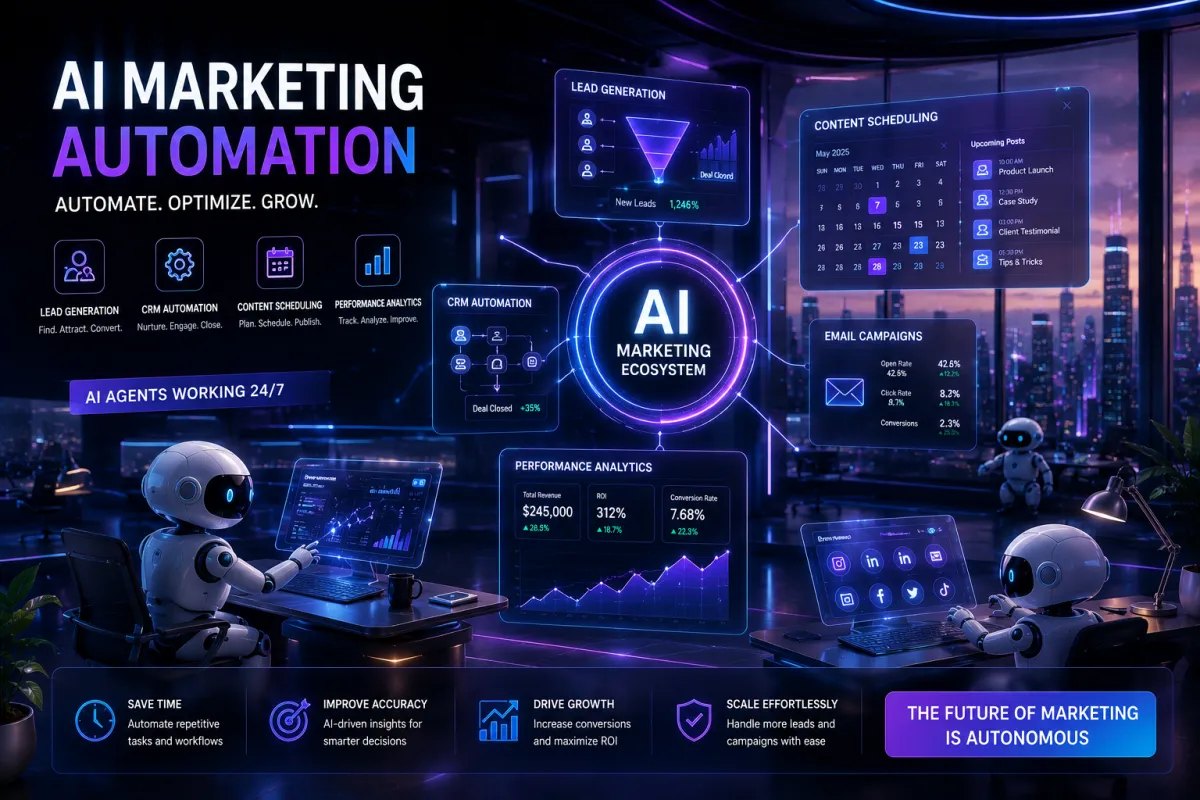
An AI agent marketing department is a system of interconnected AI tools (or “agents”) that collectively manage all core marketing functions.
Instead of one AI doing everything, multiple specialized agents handle different roles:
🧲 Lead Generation Agent
✉️ Email Outreach & Follow-up Agent
📝 Content Creation Agent
📊 Analytics & Reporting Agent
📱 Social Media Automation Agent
🤝 CRM & Sales Nurturing Agent
Together, they function like a fully staffed marketing department—without human intervention.
How AI Agents Replace Traditional Marketing Teams
1. Lead Generation Happens Automatically
AI agents continuously scan platforms, websites, and databases to identify potential customers.
They:
Collect and qualify leads
Score them based on intent
Push them directly into CRM systems
No manual scraping or data entry required.
2. Content Is Created and Published in Real-Time
AI content agents now generate:
Blog posts
Social media captions
Ad copies
Landing pages
They also optimize content based on SEO trends and user engagement data.
3. Hyper-Personalized Email Marketing
Instead of generic email blasts, AI agents:
Write personalized messages for each lead
Adjust tone based on behavior
Schedule follow-ups automatically
This leads to significantly higher conversion rates.
4. Social Media Runs on Autopilot
AI agents manage:
Posting schedules
Trend-based content creation
Hashtag optimization
Engagement replies
They ensure brands stay active 24/7 without a social media manager.
5. Real-Time Analytics & Optimization
Marketing decisions are no longer monthly or weekly.
AI agents:
Track performance in real time
Adjust ad campaigns automatically
Reallocate budget to high-performing channels
This creates a self-improving marketing ecosystem.
Why Businesses Are Adopting AI Marketing Departments
The shift is driven by three major benefits:
⚡ 1. Speed
Campaigns that once took weeks are now deployed in minutes.
💰 2. Cost Reduction
Companies reduce hiring costs for full marketing teams.
📈 3. Scalability
AI agents can handle 10x or even 100x workload without burnout.
Human Marketers Are Still Important (But Roles Are Changing)
AI is not eliminating marketers—it is changing their role.
Humans now focus on:
Strategy
Brand positioning
Creative direction
AI supervision
Instead of execution, humans become AI marketing directors.
Real-World Example of AI Agent Marketing Stack
A typical modern setup includes:
CRM AI (lead tracking & scoring)
Content AI (blogs + ads)
Outreach AI (email + WhatsApp automation)
Ad AI (Google & Meta optimization)
Analytics AI (performance dashboards)
All systems are connected into one unified workflow.
The Future of Marketing Departments
By 2030, many businesses may not have traditional marketing teams at all.
Instead, they will operate:
“AI-first marketing ecosystems”
Where humans:
Define goals
Monitor outcomes
Improve strategy
And AI agents:
Execute everything else
Conclusion
The rise of the AI agent marketing department marks a major shift in how businesses grow. Companies that adopt these systems early are gaining massive advantages in speed, efficiency, and cost savings.
The question is no longer if AI will replace marketing tasks—but how fast you adapt to it.
