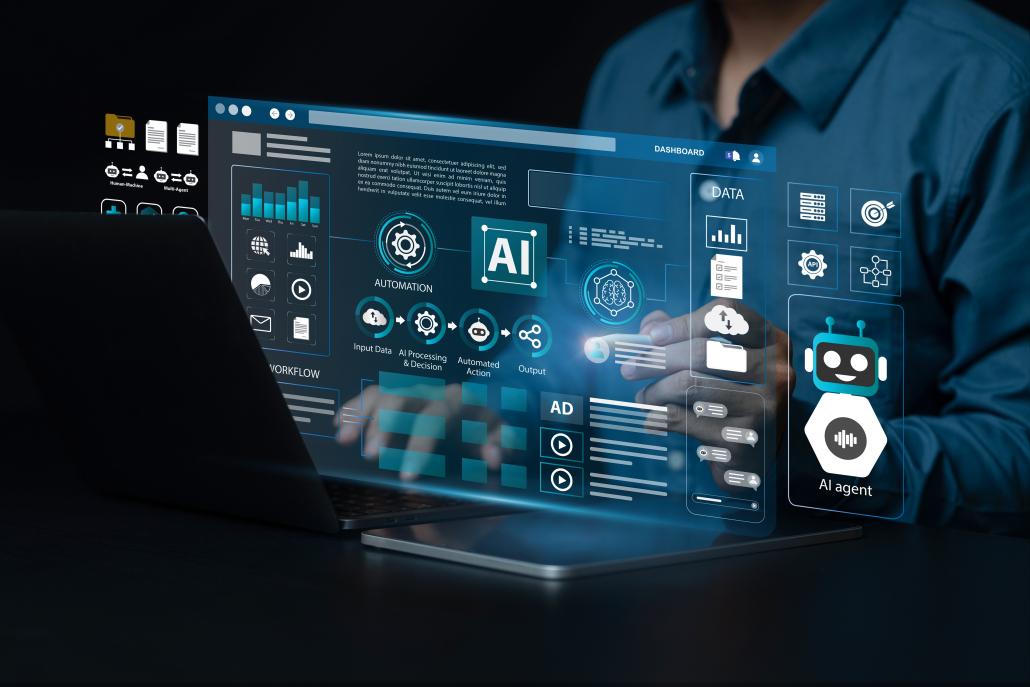
AI Agent vs. Chatbot: Why Mixing These Two Up Is Destroying Your Lead Generation Strategy
Introduction
Artificial intelligence has transformed the way businesses communicate with customers. From answering questions to booking appointments and qualifying leads, AI has become an essential part of modern marketing.
However, one of the biggest misconceptions businesses make today is assuming that AI agents and chatbots are the same thing.
They are not.
This misunderstanding costs companies thousands of dollars in lost opportunities because they implement a simple chatbot expecting enterprise-level automation.
If you've been researching AI agent vs chatbot, this guide explains the differences, when to use each, and which one can actually help grow your business.
What Is a Chatbot?
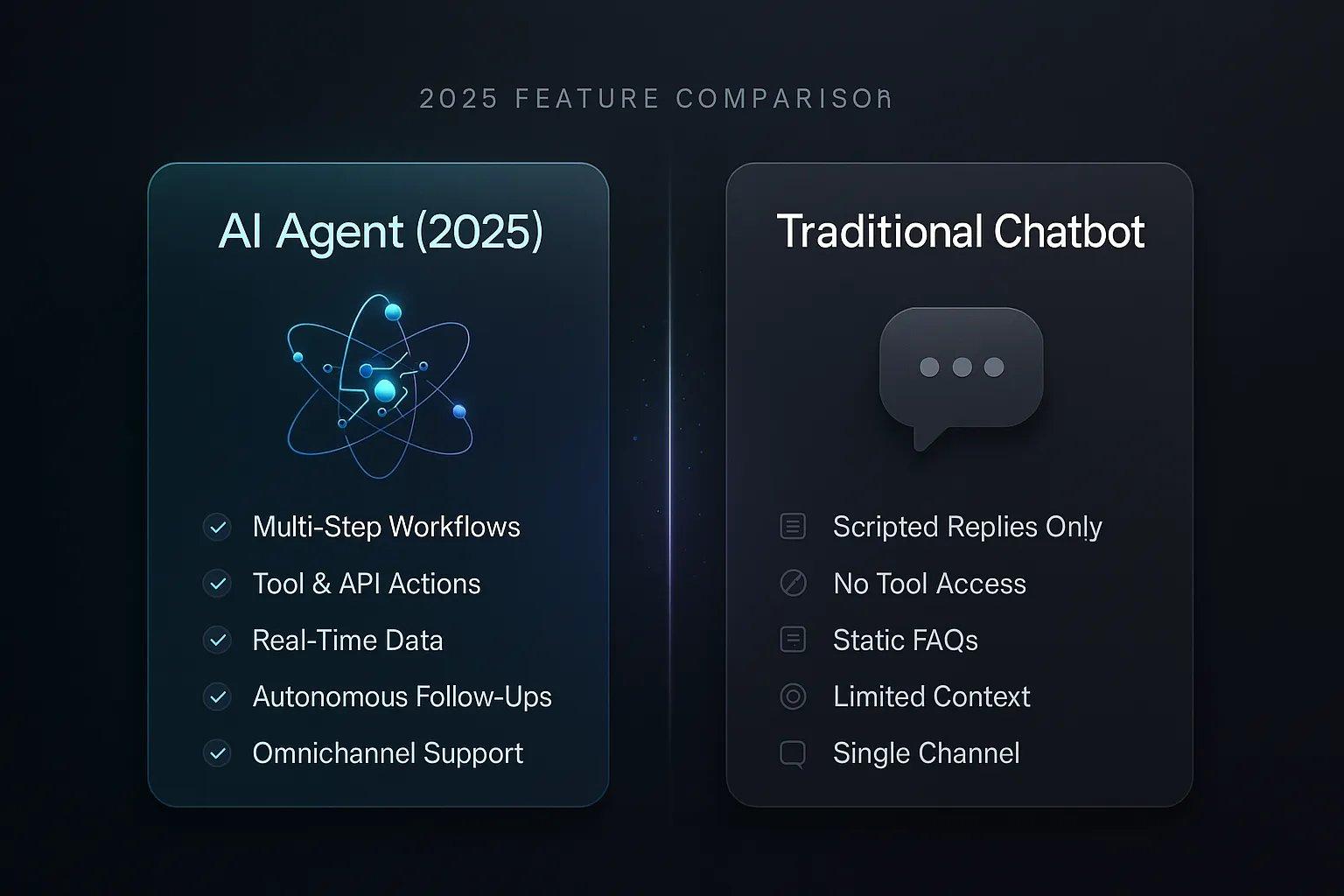
A chatbot is a rule-based conversational tool designed to answer predefined questions.
Traditional chatbots follow scripts.
For example:
Customer:
"I want pricing."
Bot:
"Here are our pricing plans."
Customer:
"I need support."
Bot:
"Click here to contact support."
Everything is based on pre-programmed flows.
Once the customer asks something unexpected, many chatbots become confused or simply respond with:
"Sorry, I don't understand."
This is because they don't actually think.
They simply follow instructions.
Common Uses of Chatbots
FAQ pages
Basic customer support
Business hours
Contact information
Appointment links
Simple order tracking
Collecting names and emails
These tasks are repetitive and predictable, making chatbots an affordable solution.
What Is an AI Agent?
An AI agent goes far beyond answering questions.
Instead of simply responding to messages, an AI agent can understand context, reason through conversations, make decisions, and complete multi-step tasks.
Think of it as a virtual employee rather than a digital FAQ.
An AI agent can:
Qualify leads
Book appointments
Send follow-up emails
Answer complex questions
Access business knowledge
Remember conversation context
Update CRM records
Trigger workflows
Recommend products
Handle objections
Continue conversations naturally
Instead of waiting for instructions, an AI agent actively works toward business goals.
Why Businesses Are Losing Leads
Imagine a visitor lands on your website at 9 PM.
They ask:
"I run a marketing agency with 20 employees. Which service would be best for me?"
A chatbot often replies:
"Please select from the following menu."
An AI agent responds differently.
It asks:
What industry are you in?
What is your biggest challenge?
How many clients do you serve?
What's your monthly revenue goal?
Then it recommends the most suitable solution and books a meeting automatically.
One conversation creates a qualified lead.
The other usually ends with the visitor leaving.
The Hidden Cost of Using the Wrong Technology
Many businesses believe they have implemented AI because they installed a chatbot.
Unfortunately, customers quickly notice the limitations.
Some common problems include:
Slow responses
Generic answers
Lost leads
Missed appointments
Poor customer experience
Low conversion rates
Frustrated visitors
Every missed lead represents potential revenue lost.
Real-World Example
Imagine two consulting businesses.
Company A
Uses a traditional chatbot.
Visitor:
"I need help growing my business."
Bot:
"Please choose one option."
Visitor leaves.
Company B
Uses an AI agent.
Visitor:
"I need help growing my business."
AI Agent:
"What industry are you in?"
"How many employees do you have?"
"What is your biggest challenge?"
After understanding the situation, it recommends the best service, answers questions, and books a consultation.
Same visitor.
Completely different outcome.
When Should You Use a Chatbot?
A chatbot is sufficient if you only need to:
Answer common questions
Display office hours
Share contact details
Provide basic customer support
Collect simple forms
These are relatively straightforward tasks.
When Should You Use an AI Agent?
Choose an AI agent if you want to:
Generate more qualified leads
Book appointments automatically
Follow up with prospects
Qualify customers
Answer sales questions
Integrate with your CRM
Automate workflows
Increase conversions
Reduce manual work
Provide personalized conversations
For growing businesses, an AI agent delivers far greater value than a basic chatbot.
AI Agent vs Chatbot for Lead Generation
Lead generation is where the difference becomes most obvious.
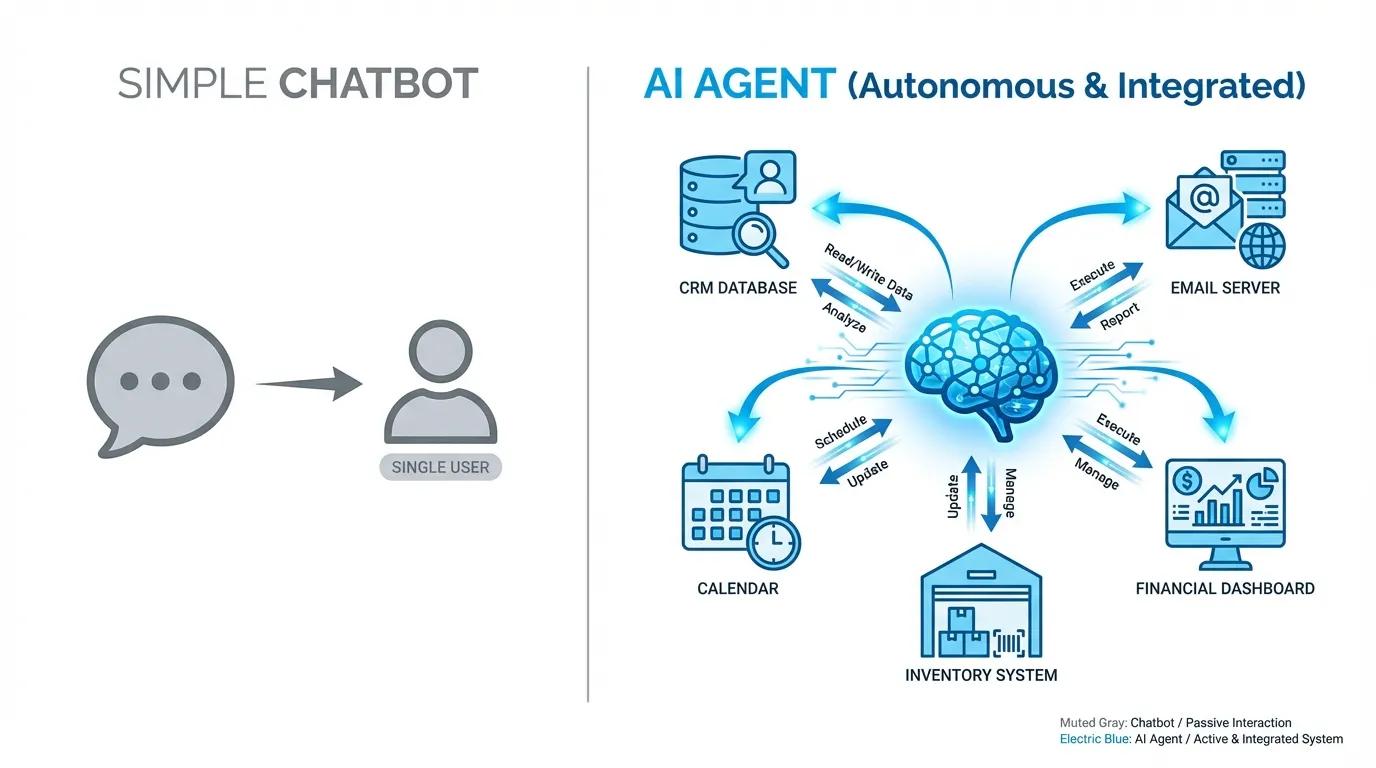
A chatbot waits for users to ask questions.
An AI agent guides the conversation.
It can:
Identify buying intent
Score leads
Ask qualifying questions
Recommend offers
Send follow-ups
Schedule meetings
Trigger email campaigns
Notify your sales team
Update your CRM automatically
Instead of simply chatting, it helps move prospects through your sales process.
Benefits of AI Agents
Businesses adopting AI agents often experience:
Faster response times
Better customer engagement
More booked appointments
Higher conversion rates
Reduced support costs
Improved customer satisfaction
Consistent lead qualification
24/7 availability
Scalable customer service
As customer expectations continue to rise, AI agents provide businesses with a significant competitive advantage.
Common Misconceptions
Myth 1
"AI agents are just advanced chatbots."
Reality:
AI agents are capable of reasoning, planning, and completing tasks.
Myth 2
"Chatbots can replace sales teams."
Reality:
Basic chatbots assist sales teams.
AI agents actively support and automate large portions of the sales process.
Myth 3
"AI agents are only for large companies."
Reality:
Small and medium-sized businesses are increasingly using AI agents to automate lead generation, customer service, and appointment booking.
Is an AI agent better than a chatbot?
For businesses focused on sales, lead generation, and automation, an AI agent typically provides more advanced capabilities than a basic chatbot.
Can an AI agent replace customer support?
It can handle many routine customer interactions, allowing human agents to focus on more complex cases.
Are AI agents expensive?
Many AI agent solutions are scalable, making them accessible to businesses of various sizes. The return on investment often comes from improved efficiency and increased conversions.
Can AI agents integrate with CRMs?
Yes. Most modern AI agents can integrate with CRM platforms, calendars, email systems, and automation tools.
Can AI agents work 24/7?
Yes. They can engage with prospects, answer questions, and perform tasks around the clock.
Understanding the difference between an AI agent vs chatbot is essential for businesses looking to improve lead generation and customer engagement.
A chatbot is useful for handling simple, repetitive interactions.
An AI agent goes further by understanding context, qualifying leads, automating workflows, and helping move prospects through the sales process.
If your goal is to generate more leads, book more appointments, and create a more personalized customer experience, investing in the right AI solution can make a meaningful difference.
Ready to Automate Your Lead Generation?
Stop relying on basic chatbots that simply answer questions.
Implement an AI agent that can qualify leads, book appointments, automate follow-ups, and help your business convert more visitors into customers.
Contact us today to discover how AI-powered automation can transform your sales process.
