
Why Most Businesses Using AI Agents Are Getting Weak Results (The Real Reason)
Artificial Intelligence has become one of the biggest business trends of the decade.
Every week there seems to be another company promising that AI agents will replace employees, close more sales, automate customer support, and grow revenue with little effort.
Yet thousands of businesses are quietly asking the same question:
Why are our AI agents not delivering the results we expected?
If you've invested in AI and feel disappointed, you're not alone.
The truth is surprisingly simple:
Most AI agents are not the problem. The business systems behind them are.
In this guide, you'll learn why AI agents fail, the mistakes most businesses make, and how to build an AI system that actually produces measurable business growth.

The Biggest Myth About AI Agents
Many business owners believe an AI agent is like hiring an experienced employee.
They expect it to:
Book appointments
Answer customer questions
Follow up with leads
Close sales
Manage customer relationships
...all without proper planning.
Unfortunately, AI doesn't work that way.
An AI agent only performs as well as the system it's connected to.
If your business processes are messy, disconnected, or incomplete, AI simply automates the confusion.
Why AI Agents Are Not Working for Business
The primary reason AI agents not working for business has become such a common complaint is because businesses try to automate before organizing.
Imagine hiring the world's best employee...
Then giving them:
No training
No documentation
No process
No customer data
No sales system
Would they succeed?
Probably not.
AI agents face the exact same challenge.
AI Doesn't Fix Broken Systems
Many companies have disconnected tools like:
CRM
Email marketing
SMS marketing
Website forms
Calendars
Lead databases
Sales pipelines
None of them communicate properly.
Then they install an AI chatbot expecting everything to magically improve.
Instead, the AI:
Gives inconsistent answers
Misses follow-ups
Can't qualify leads properly
Books poor-quality appointments
Creates customer frustration
The AI isn't broken.
The business infrastructure is.
The Real Formula
Successful companies follow a different approach.
Instead of:
AI First
They build:
Business Process → Automation → AI
That order changes everything.
Step 1: Organize the Customer Journey
Every customer follows a journey.
For example:
Visitor
↓
Lead
↓
Qualified Prospect
↓
Appointment
↓
Proposal
↓
Customer
↓
Repeat Customer
↓
Referral
Every stage should have a defined process.
Only then should AI be introduced.
Step 2: Clean Your CRM
Your CRM is the brain of your business.
If it contains:
Duplicate contacts
Missing information
Incorrect tags
Broken pipelines
Outdated leads
AI cannot make smart decisions.
Garbage in.
Garbage out.
Step 3: Build Smart Automations
Before AI starts making decisions, repetitive work should already be automated.
Examples include:
Welcome emails
Appointment reminders
Lead nurturing
Review requests
Missed call text-back
Internal team notifications
Pipeline updates
Follow-up sequences
Automation creates consistency.
AI adds intelligence.
Step 4: Give AI Clear Instructions
An AI agent needs:
Business information
Product knowledge
Pricing
FAQs
Sales scripts
Customer policies
Escalation rules
Brand tone
Without this information, AI starts guessing.
Guessing creates poor customer experiences.
Common Mistakes Businesses Make
Buying AI Before Having a Process
Technology cannot replace strategy.
Expecting AI to Close Every Sale
AI supports your sales process.
It doesn't replace trust.
No Follow-Up System
Even the smartest AI can't recover leads if no follow-up workflow exists.
Poor CRM Management
AI depends on quality data.
Bad data leads to poor recommendations.
No Human Oversight
The best businesses combine AI speed with human expertise.
That combination consistently delivers better customer experiences.
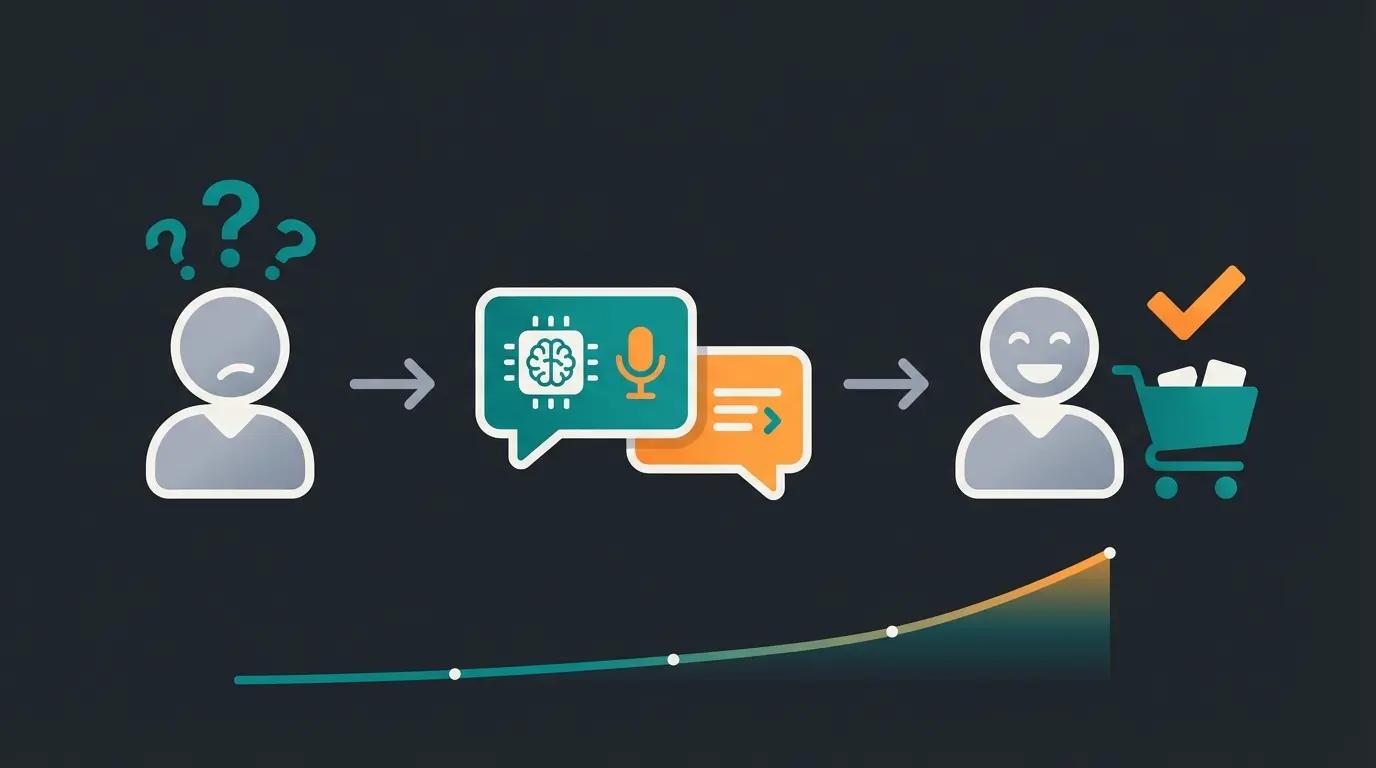
What High-Performing Businesses Do Differently
Companies getting excellent AI results typically have:
✅ Organized CRM
✅ Automated workflows
✅ Clear sales process
✅ Customer journey mapping
✅ Integrated business tools
✅ Consistent follow-up
✅ Well-trained AI agents
Notice something?
AI is only one part of the system.
A Real-World Example
Imagine two businesses install the exact same AI agent.
Business A
No CRM organization
No automation
No sales pipeline
No lead tracking
Manual follow-up
Result:
Poor appointments.
Missed leads.
Confused customers.
Business owners conclude:
"AI doesn't work."
Business B
Before installing AI:
CRM cleaned
Pipelines organized
Website connected
Email automation built
SMS automation configured
Sales stages documented
Knowledge base created
Then AI is added.
Result:
Faster responses
Better customer experiences
More booked appointments
Higher conversion rates
Less manual work
Better reporting
Same AI.
Different system.
Very different outcome.
Signs Your AI System Needs Improvement
Your business may need a better AI strategy if:
Leads stop responding
AI gives incorrect answers
Customers repeat questions
Follow-ups are inconsistent
Appointments are low quality
Sales team loses trust in AI
CRM data is incomplete
Automation frequently breaks
These are system problems—not AI problems.
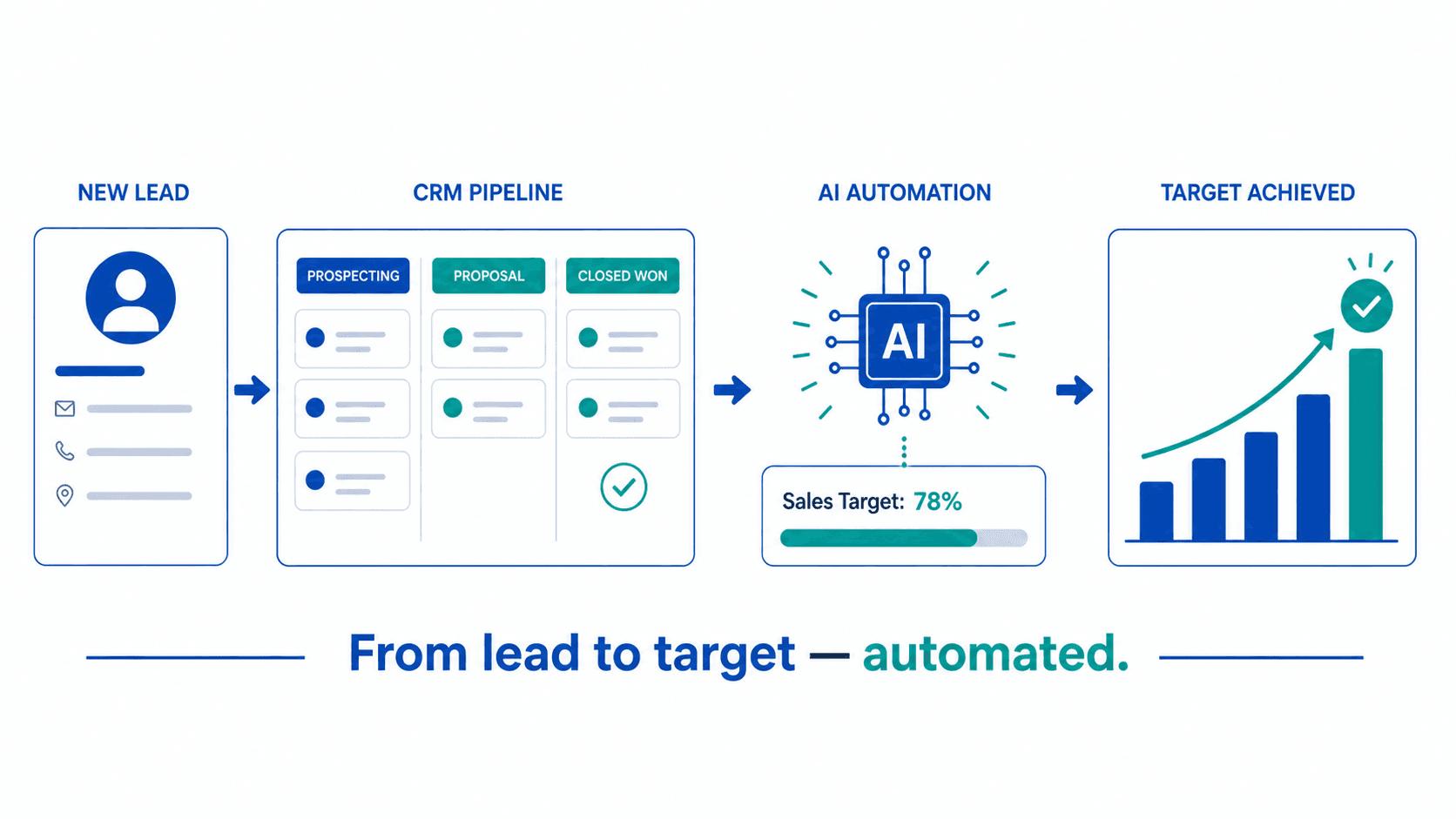
The Future of AI in Business
Businesses that win with AI won't necessarily have the smartest software.
They'll have:
Better systems
Better processes
Better customer data
Better automation
Better integration
AI becomes the accelerator—not the foundation.
Final Thoughts
If your AI agents are not working for business, don't rush to replace the software.
Instead, examine the systems supporting it.
When your CRM, workflows, customer journey, and automation are properly structured, AI becomes dramatically more effective.
The businesses seeing the strongest results understand one important principle:
AI doesn't create great systems—it amplifies the systems you already have.
Build the right foundation first, and your AI agents will finally perform the way you expected.
Frequently Asked Questions (FAQ)
Why are AI agents not working for my business?
Most AI agents fail because they are connected to disorganized business systems, incomplete CRM data, and poorly designed workflows. The issue is usually the process—not the AI itself.
Can AI replace my sales team?
No. AI is designed to assist your sales team by automating repetitive tasks, qualifying leads, and responding quickly. Human relationships remain essential for closing complex sales.
What should I build before using AI?
You should first establish:
A clean CRM
Documented business processes
Automated workflows
Lead nurturing sequences
Customer journey mapping
Knowledge base for the AI
Does AI improve customer service?
Yes—when implemented correctly. AI can provide faster responses, answer common questions, qualify inquiries, and route customers efficiently while allowing your team to focus on higher-value conversations.
Conclusion
AI has incredible potential, but success doesn't come from installing another chatbot or automation tool.
It comes from building a business where every system works together seamlessly.
When your CRM, workflows, customer journey, and AI agents operate as one connected ecosystem, you'll see faster responses, stronger customer relationships, higher conversion rates, and scalable growth.
Don't ask whether AI works.
Ask whether your business is truly ready for AI.
